




 6 דקה
6 דקה - הגרש שכולם נופלים בו | איך מסבירים אפוסטרוף לילדים?
- ניווט בזמני פועל | כל מה שצריך לדעת על עבר והווה
- משפטי התנייה שהופכים כללים לפשוטים
- הוא, היא או זה? כינויים ללא בלבול
- מי ש… אשר ש… | עושים סדר בכינויי יחס
האם אי פעם מצאתם את עצמכם מסתבכים ברשת הדקדוק באנגלית, תוהים מדוע כללים מסויימים נראים חמקמקים יותר מאחרים? דקדוק אולי לא תמיד נשמע נושא מרגש, אך הוא עמוד התווך של כל שפה – כמו הבנה של כל מרכיב במתכון, כך גם הבנה של כל חלק בדקדוק מביאה לשליטה בשפה. בנובאקיד, אנחנו מכירים היטב את המבוך שכרוך בלימוד אנגלית כשפה שנייה. בדיוק בגלל זה אנחנו כאן – כדי לפרק את האתגרים הגדולים ביותר לחלקים קטנים וברורים, ולהפוך את הלמידה לחוויה מהנה ומשמעותית עבור ילדים. קחו עט ונייר, ובואו נתחיל!
*המאמר כתוב בלשון זכר אך פונה לכלל המגדרים.
הגרש שכולם נופלים בו | איך מסבירים אפוסטרוף לילדים?
הגרש (Apostrophe) עלול לבלבל לא רק ילדים אלא גם מבוגרים. יש לו שני תפקידים עיקריים: לציין שייכות וזיקה, למשל Sarah's Book, וליצור קיצורים כמו Don't ו-It's. כדי לעזור לילדים להבין את הנושא, משתמשים בשיטות הוראה חווייתיות – משחקים, המחזות, מולטימדיה ותרגולים יומיומיים. דרך תרגול קבוע, הילדים קולטים מתי הגרש חיוני, ואיך לא ליפול למלכודת הדקדוקית.

ניווט בזמני פועל | כל מה שצריך לדעת על עבר והווה
בשפה האנגלית יש זמני פועל רבים, שכל אחד מהם מביע זמן או גוון אחר בפעולה. הבנת ההבחנה ביניהם חיונית לתקשורת כתובה ומדוברת. הנה הצצה למרכזיים שבהם:
- הווה מושלם (Present Perfect): מתאר פעולה שהתרחשה בזמן לא מוגדר בעבר או שהתחילה בעבר ונמשכת בהווה. לדוגמה: I have eaten.
- עבר פשוט (Past Simple): מתאר פעולה שקרתה בזמן מסוים בעבר וכבר הסתיימה. לעיתים קרובות זה נוצר על ידי הוספת ed לפועל (למשל, Walk = Walked), או שימוש בצורות פועל לא סדירות (למשל, Go = Went). לדוגמה: I ate dinner at 7 p.m.
- צורות מתמשכות (Progressive): מדגישות פעולה שנמשכת בנקודת זמן כלשהי. לדוגמה: I was eating.
- צורות מושלמות (Perfect): פעולה שהושלמה עד לנקודת זמן מסוימת. לדוגמה: I had eaten before he arrived.
בנובאקיד הופכים את הזמנים הללו למוחשיים בעזרת תרגולים חיים, סיפורים אישיים והמחשות ויזואליות. כשזה מוגש בצורה נכונה – זה הופך למשחק מהנה.
משפטי התנייה שהופכים כללים לפשוטים
משפטי התנייה נשמעים מסובכים, אבל הם חיוניים לשיחה שוטפת:
- אפס מותנה (Zero Conditional): מתייחס לאמיתות או עובדות כלליות. הוא מורכב מ"אם" + הווה פשוט, ואחריהם הווה פשוט. לדוגמה: If you heat water, it boils
- תנאי ראשון (First Conditional): מתייחס לתוצאה אפשרית בעתיד. הוא מורכב מ"אם" + הווה פשוט, ואחריו פשוט עתידי (רצון + צורת בסיס) במשפט הראשי. לדוגמה, If it rains, we will stay home
- תנאי שני (Second Conditional): מתאר מצבים לא אמיתיים בהווה. הוא מורכב מ"אם" + עבר פשוט, ואחריו "היה" + צורת בסיס במשפט הראשי. הוא מורכב מ"אם" + עבר מושלם, ואחריו "היה" + חלק עבר במשפט הראשי. לדוגמה, If i had a dog,I would be happy
- תנאי שלישי (Third Conditional): מתייחס לחרטה מהעבר. לדוגמה: If I had studied, I would have passed

The zero conditional expresses certainty, the first conditional expresses possibility or probability, the second conditional expresses hypothetical or unreal situations in the present or future, and the third conditional expresses regret or imaginary situations in the past. The emphasis is on identifying the structures, reinforcing understanding through examples, and connecting to situations from the child's daily life.
הוא, היא או זה? כינויים ללא בלבול
Pronouns are words that replace nouns in sentences. Although they are intended to shorten and make sentences clearer, they can sometimes be confusing:
- Personal pronouns: I, you, he, she, it, we, they.
- Possessive pronouns: Mine, yours, his, hers.
- Pronouns of reference: This, that, these, those (this, that, those – regarding something close to us, those – regarding something distant from us).
Identifying the correct pronoun prevents ambiguity. Practicing the subject will give English as a second language speakers the tools to use it accurately.
מי ש… אשר ש… | עושים סדר בכינויי יחס
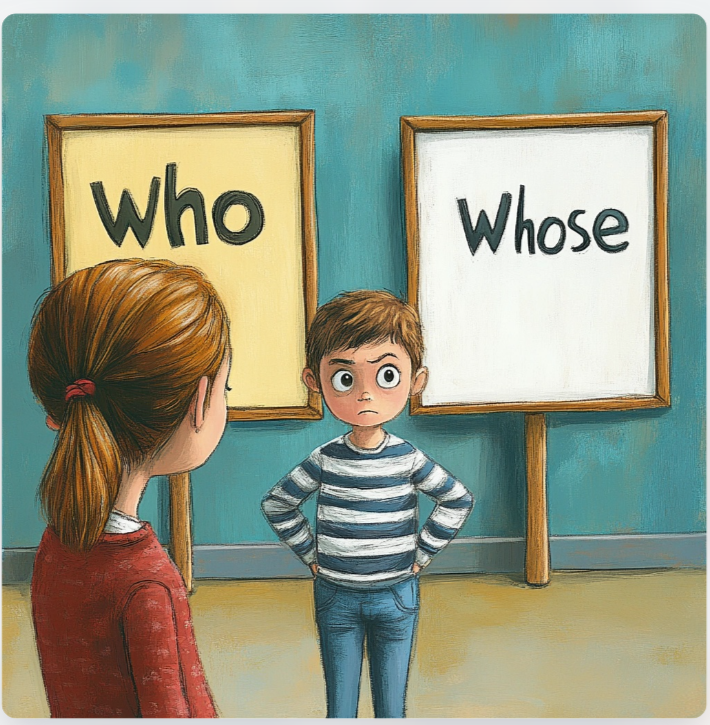
Relative pronouns connect sentences and add information. For example:
- Who: refers to people, as a subject. For example:
The teacher who helped me was very kind.
The subject is Who and it refers to the verb Helped.
- Whom: refers to people, as an object. For example:
The student whom the teacher praised got an award.
The object is Whom which refers to the verb Praised.
- Whose: Indicates belonging. For example:
The girl whose dog ran away is very upset.
The word Whose indicates that the dog belongs to the girl.
- Which: refers to inanimate objects or animals, but not humans. For example:
The book which you lent me was fascinating.
The word Which refers to a Book, an inanimate object.
- This / That: For general use, usually in informal contexts. For example:
The movie that we watched last night was amazing.
In this case, you can also use "Which", but using "That" is more appropriate for everyday language.
When you learn to identify the function of each relative pronoun, you can understand when it is necessary and thus avoid mistakes.
Mastering English grammar, including difficult words and complex structures, is not an impossible task. With patience, practice, and appropriate teaching methods, this journey can be a fascinating and successful adventure.
At Novakid we guide children on the path to success in English. Do you want your children to gain confidence in the language? Sign up for our online classes and give them a strong start!